
A physical therapist’s guide to building power, preventing injury, and training the kinetic chain
Tennis is one of the most physically demanding racquet sports on the planet. A competitive match demands explosive multi-directional sprints, repeated rotational power generation, overhead loading, and the ability to decelerate hard after every shot. Yet most recreational and even competitive players spend their training time almost entirely on the court.
The result? Preventable injuries. Power left on the table. Asymmetries that quietly accumulate until something gives.
As a physical therapist working with athletes across the performance spectrum here at Voltex Physical Therapy in Austin, I’ve found that a well-designed strength program doesn’t just reduce injury risk — it actively makes players better. More powerful serves. More controlled groundstrokes. Faster court coverage.
Here are the 13 exercises I consider foundational to any tennis strength program, organized by the physical demand they address.
Why Strength Training Matters for Tennis Players
Before we get into the exercises, it’s worth understanding what the sport actually demands from the body:
- Explosive, multi-directional movement — split steps, lateral shuffles, forward sprints, and abrupt stops, all in rapid succession.
- Rotational power generation — groundstrokes and serves originate at the ground and transfer force through the hips, trunk, and shoulder in a single kinetic chain.
- Deceleration strength — the ability to absorb force after sprints and landings is where many tennis injuries originate.
- Shoulder and scapular stability — overhead and lateral forces during serving place significant demand on the rotator cuff and scapular stabilizers.
- Asymmetry management — years of dominant-side hitting create muscle imbalances that, left unaddressed, increase injury risk significantly.
With that framework in mind, here’s what belongs in your program.
1. Lower Body Power and Force Transfer
Every powerful groundstroke and serve begins at the ground. Lower body strength is the engine of the entire kinetic chain.
1. Romanian Deadlift (RDL)
The RDL is arguably the single most important lower body exercise for tennis players. Tennis demands repeated hip hinging — loading out of a split step, lunging for wide balls, absorbing force on recovery steps. The RDL builds posterior chain strength and hip hinge mechanics that protect the low back under high-speed deceleration.
Injury prevention note: Eccentric hamstring strength developed through RDL work is one of the primary modifiable risk factors for ACL injury — a major concern in multi-directional court sports. [1, 2]
▶ EMBED VIDEO: Romanian Deadlift (RDL)
2. Split Squat / Bulgarian Split Squat
Tennis is played almost entirely in split stance. The Bulgarian split squat directly trains the unilateral loading pattern, hip abductor stability, and frontal-plane knee control required during lateral shuffles, split steps, and the contact phase of groundstrokes. [2]
This exercise is also critical for identifying and correcting limb asymmetries, which are nearly universal in competitive players due to the directional bias of court movement.
▶ EMBED VIDEO: Bulgarian Split Squat
3. Trap Bar Deadlift
For developing raw lower body force production in a mechanically safe pattern, the trap bar deadlift is hard to beat. Research consistently shows trap bar variations produce higher peak power outputs than straight bar, making them ideal for building the drive force used in explosive direction changes and serve jump mechanics. [7, 8]
4. Lateral Band Walk / Crab Walk
Simple, but underrated. Hip abductor weakness — specifically glute medius — is a significant contributor to lateral knee valgus, IT band syndrome, and patellofemoral pain, all common in tennis players. Lateral band work activates glute medius in the functional range used during court coverage and creates a stable base for force transfer up the kinetic chain. [9]
2. Rotational Power and Core
The serve, forehand, and backhand are fundamentally rotational power expressions. Core training for tennis isn’t about crunches — it’s about force generation and transmission through the trunk.
A strength and conditioning meta-analysis found that rotational power training transferred directly to serve speed in tennis players — making medicine ball and cable rotation work some of the highest-ROI training you can do off court. [4]
1. Medicine Ball Rotational Throw
This is the most sport-specific exercise on this list. Medicine ball rotational throws train the complete kinetic chain — ground reaction force → hip rotation → trunk rotation → shoulder → arm — at velocities closer to actual sport demands than any barbell or cable exercise can replicate. [3]
Include wall throws, chest passes, and overhead slam variations to hit multiple force vectors. Research on overhead athletes consistently shows that rotational power training transfers directly to serve speed and groundstroke power. [4]
2. Pallof Press
Anti-rotation core training is as important as rotation training. Tennis demands the trunk resist unwanted rotation during off-balance shots, while simultaneously generating controlled rotation on powerful groundstrokes. The Pallof press builds the stiffness-under-load quality that prevents energy leakage through the core and reduces lumbar injury risk. [5]
▶ EMBED VIDEO: Pallof Press
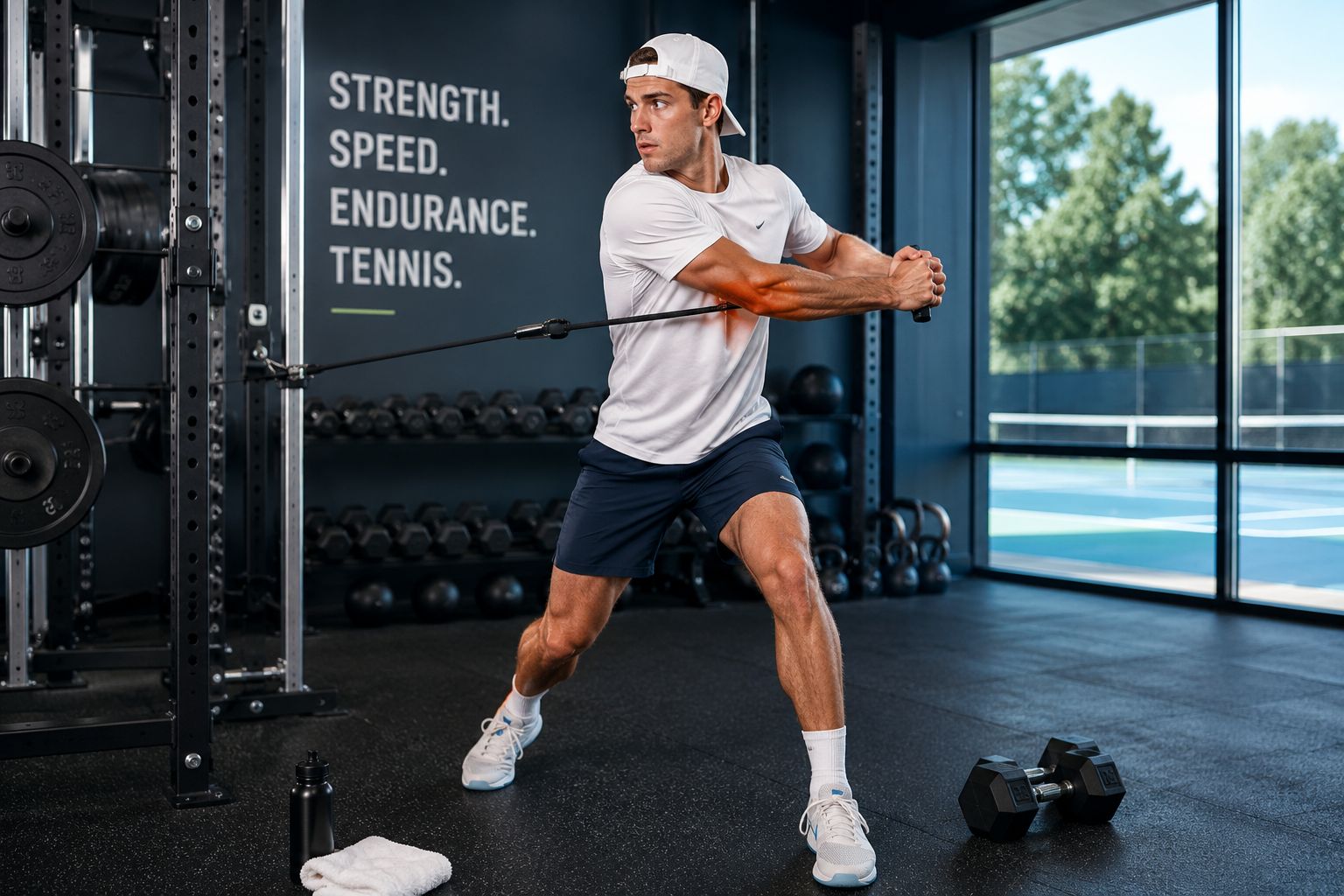
7. Cable Woodchop (High-to-Low and Low-to-High)
The woodchop replicates the diagonal force vectors of groundstrokes across multiple planes. High-to-low mimics the serve and overhead motion; low-to-high mimics the drive component of topspin groundstrokes. Progressive loading in pattern-specific planes offers direct kinetic chain conditioning that isolated abdominal exercises simply cannot provide. [6]
▶ EMBED VIDEO: Kneeling Oblique Rotation with Cable
3. Shoulder and Scapular Health
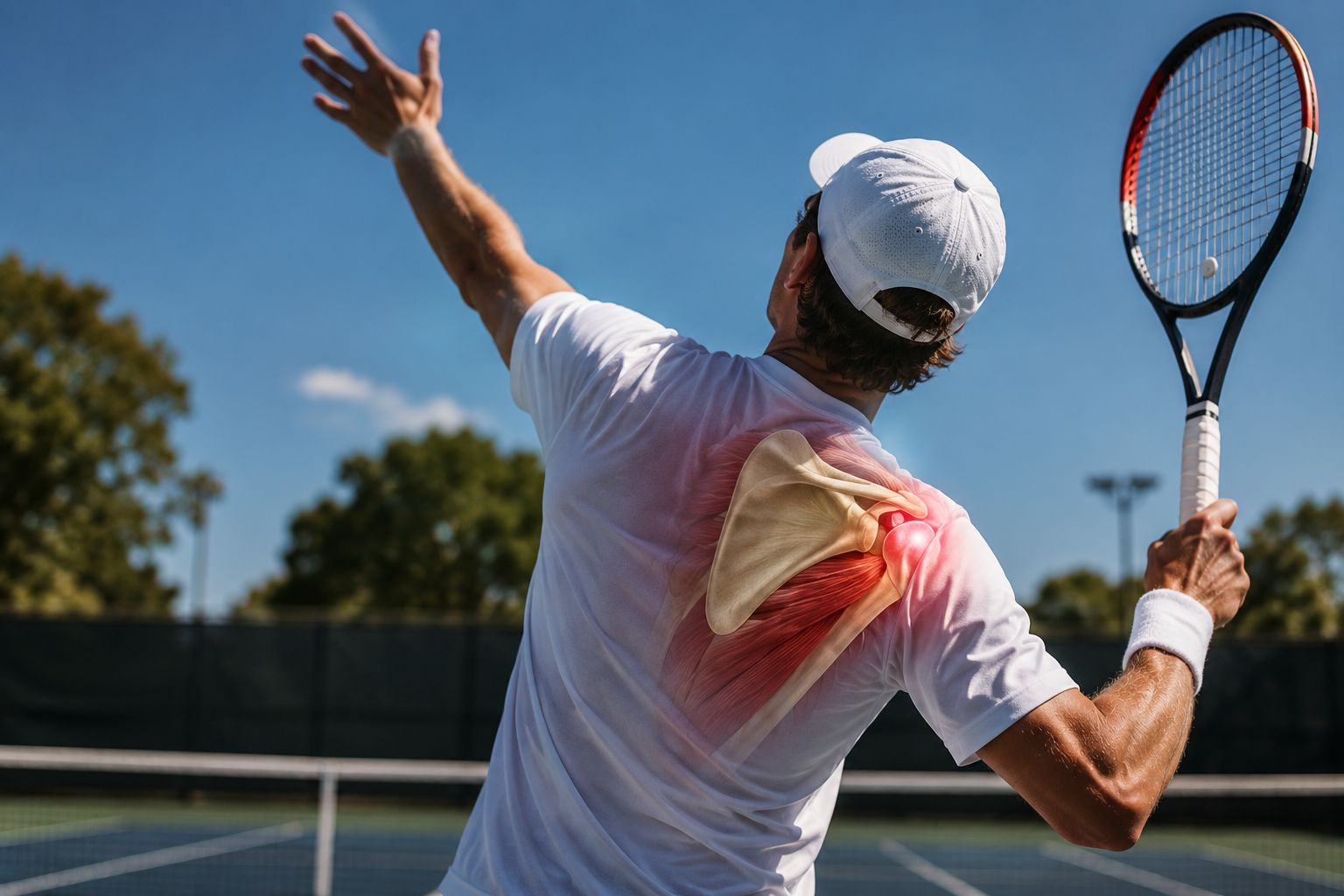
Shoulder pathology is among the most common overuse injuries in tennis. Most of it is preventable with consistent shoulder health work — and at Voltex PT, this is one of the most underaddressed areas we see when tennis players come in for their first evaluation.
Scapular dyskinesis — abnormal shoulder blade movement — is found in a significant proportion of overhead athletes and is a primary upstream contributor to rotator cuff pathology. The good news: it’s highly trainable. [13, 14]
1. Y-T-W-L Raises
Scapular dyskinesis is prevalent in overhead athletes and a primary contributor to subacromial impingement and rotator cuff pathology. Y-T-W-L movements directly activate the lower and middle trapezius and serratus anterior, which control glenoid positioning during the serve. [13]
Clinical note: Maintaining adequate subacromial space during the high-velocity overhead motion of a serve depends heavily on the scapular stabilizers trained by this exercise. Many players have significant deficits here that go completely unnoticed until pain develops. [14]
▶ EMBED VIDEO: T, V, W, 90-90 Shoulder Series
2. Side-Lying External Rotation / ER in Scaption
Internal-to-external rotation ratio imbalances are nearly universal in tennis players due to the high volume of internal rotation loading in groundstrokes and serves. Isolated external rotation training in both sidelying and scaption planes (30 degrees of horizontal abduction) restores this ratio and directly reduces the risk of posterior shoulder impingement and internal impingement syndromes. [15, 16]
▶ EMBED VIDEO: Shoulder ER in Scaption
4. Cable Face Pull
The face pull is perhaps the best maintenance exercise for tennis players’ shoulder health. It counters the forward shoulder posture and internal rotation bias that develops from high-volume practice, while training scapular retraction with simultaneous external rotation — the exact opposite of the dominant serve motion.
Include this in every training session as part of warm-up or as a corrective superset with pressing and overhead work. It costs almost nothing in recovery and pays significant dividends in shoulder longevity.
4. Deceleration and Landing Mechanics
Most strength programs focus on acceleration and power production. In tennis, the ability to decelerate safely is just as important — and far more often where injuries actually happen.
Including the Nordic hamstring exercise in injury prevention programs has been shown to halve the rate of hamstring injuries in a systematic review and meta-analysis of 8,459 athletes. If you’re competing and not doing some form of eccentric hamstring loading, you’re leaving injury prevention on the table. [11]
1. Nordic Hamstring Curl
The Nordic hamstring curl has the strongest evidence base of any exercise for hamstring strain prevention. Tennis involves repeated high-speed sprints followed by abrupt deceleration — exactly the eccentric hamstring loading context where strains occur. [10, 11]
Nordic curls increase fascicle length and eccentric peak torque, addressing the most modifiable intrinsic injury risk factor for hamstring strains. This should be a non-negotiable inclusion for any competitive player. If you don’t yet have access to a partner or GHD machine to anchor your feet, a band-assisted regression is equally effective as a starting point. [12]
Note: We don’t currently have a Voltex video for this exercise, but we have hamstring-specific progressions in our exercise library. Ask Dr. Douglas at your next session for the right regression to start with.
2. Single-Leg Squat / Pistol Squat Progression
The single-leg squat both assesses and trains unilateral limb control critical for landing mechanics after split steps and jumping shots. It identifies asymmetries between dominant and non-dominant limbs that bilateral exercises mask.
Clinically, hip adductor dominance and contralateral pelvic drop during single-leg loading are direct risk factors for patellofemoral and ACL issues in court sport athletes. Address these patterns here before they show up as injuries on court.
3. Lateral Bound to Stabilization
This exercise bridges the gap between gym strength and court movement more effectively than almost anything else on this list. Lateral bounds train the explosive push-off force and — critically — the single-leg landing mechanics after a wide-ball recovery.
Teaching athletes to control the deceleration phase after explosive lateral force is one of the most important injury prevention skills you can develop. Progress from slow, controlled landings to reactive, game-speed bounds as competency develops.
Programming Considerations
A few principles for translating this exercise list into an actual program:
- Periodize around the competitive schedule. In-season, reduce volume and maintain intensity. Off-season is the time to build foundational strength.
- Address asymmetries first. Before adding external load, ensure single-leg balance, hip abductor strength, and ER/IR ratios are within acceptable ranges. Training imbalances harder makes them worse.
- Respect the kinetic chain. A weak gluteus medius undermines rotational power regardless of how strong the core is. Build from the ground up.
- Don’t neglect the medicine ball work. Power training belongs in every phase. Strength without power expression doesn’t transfer to the court.
- Frequency: 2–3 sessions per week during off-season, 1–2 during competition season, with at least one full day between sessions and match days.
The racquet skills come from the court. The body that executes them — that’s built in the gym.
Frequently Asked Questions
How many days a week should tennis players strength train?
During the off-season, 2–3 sessions per week is ideal for building foundational strength and addressing asymmetries. During the competitive season, drop to 1–2 sessions — keep the intensity high, reduce volume, and ensure there’s at least a full day of recovery between your last lifting session and any match.
Will strength training slow me down on the court?
No — when programmed correctly, it makes you faster. Research consistently shows that lower body force production, rotational power, and eccentric hamstring strength all transfer directly to court speed, serve velocity, and change-of-direction ability. [4] The key is appropriate periodization: avoid high-volume training in the 48–72 hours before important matches.
Should I strength train if I currently have a shoulder or knee injury?
It depends on the injury — but often, yes. Many tennis-related shoulder and knee conditions respond well to targeted progressive loading as part of a rehabilitation plan. A sports-focused PT can assess which exercises are appropriate for your current presentation and build a program around your injury rather than around it. We do exactly this at Voltex PT.
I’m a recreational player, not a competitive one. Is this program relevant to me?
Absolutely. Recreational players often have more asymmetries and less posterior chain development than competitive players — precisely because they haven’t done this work. The injury prevention benefits apply at every level, and the performance gains are something any player will notice on court.
Work With a Tennis-Focused Physical Therapist in Austin
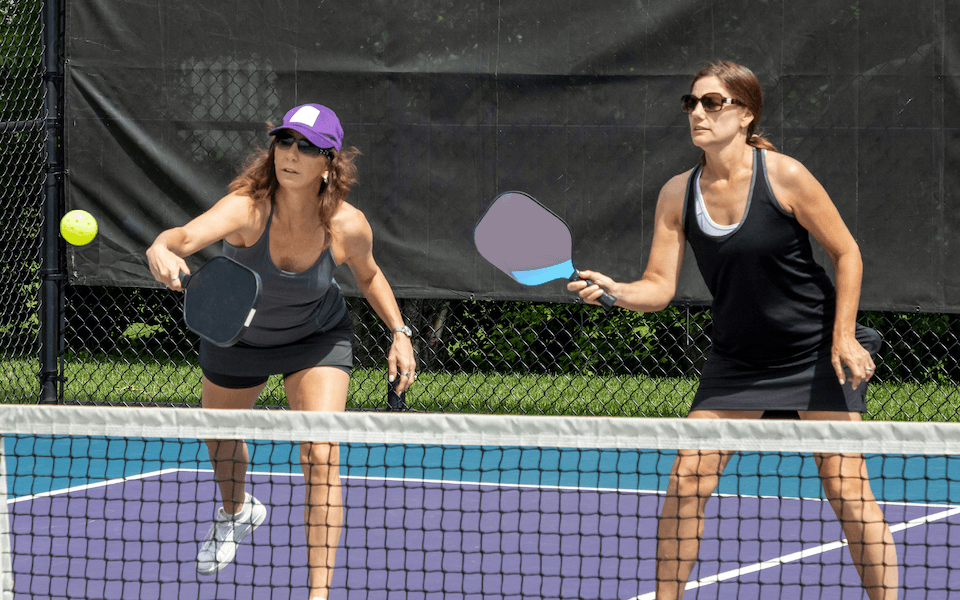
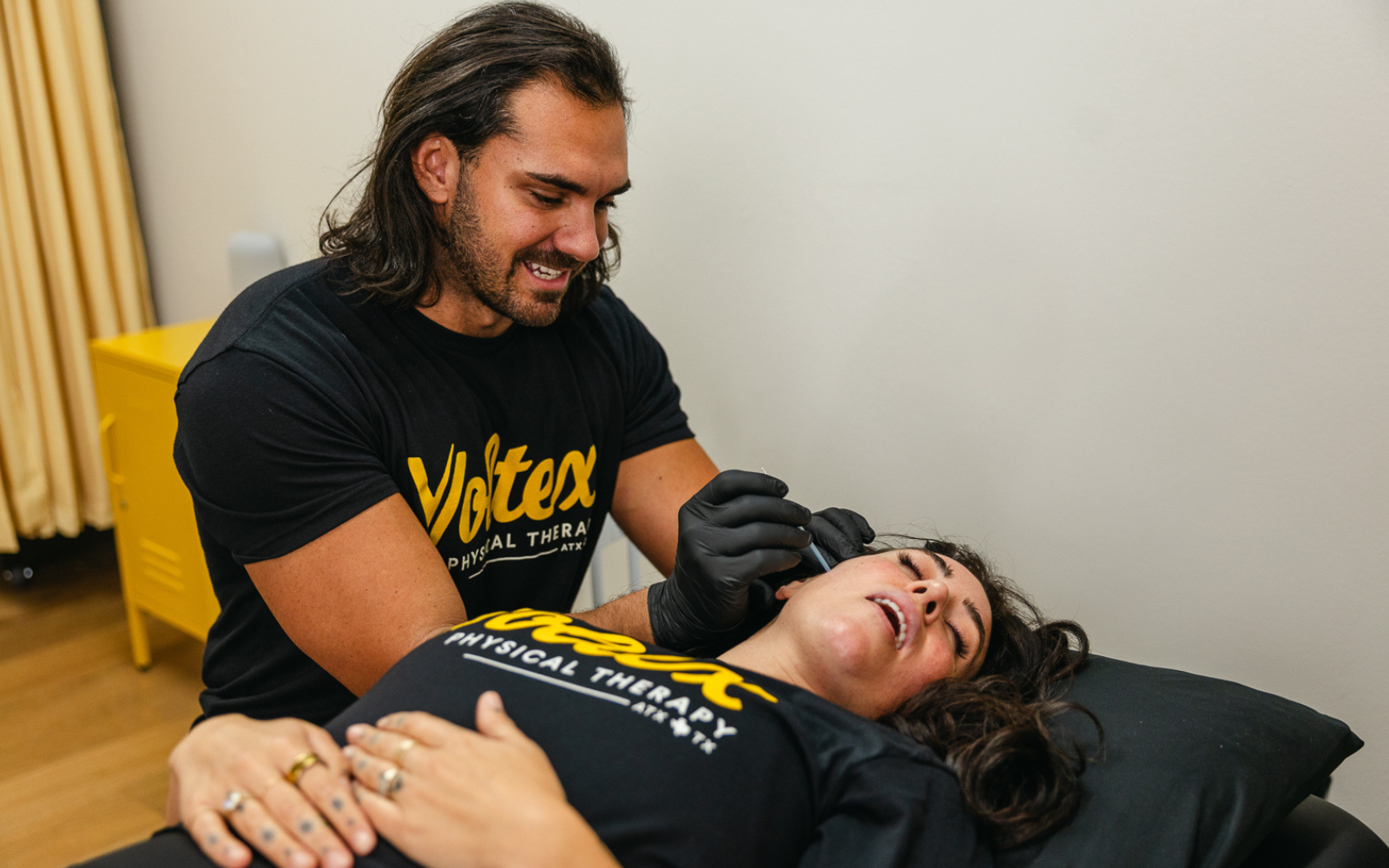
This list gives you a solid framework — but the best strength program is one tailored to your body, your injury history, and your competitive schedule. At Voltex Physical Therapy on North Lamar in Austin, we work one-on-one with tennis and pickleball players to build sport-specific programs that reduce injury risk and improve on-court performance.
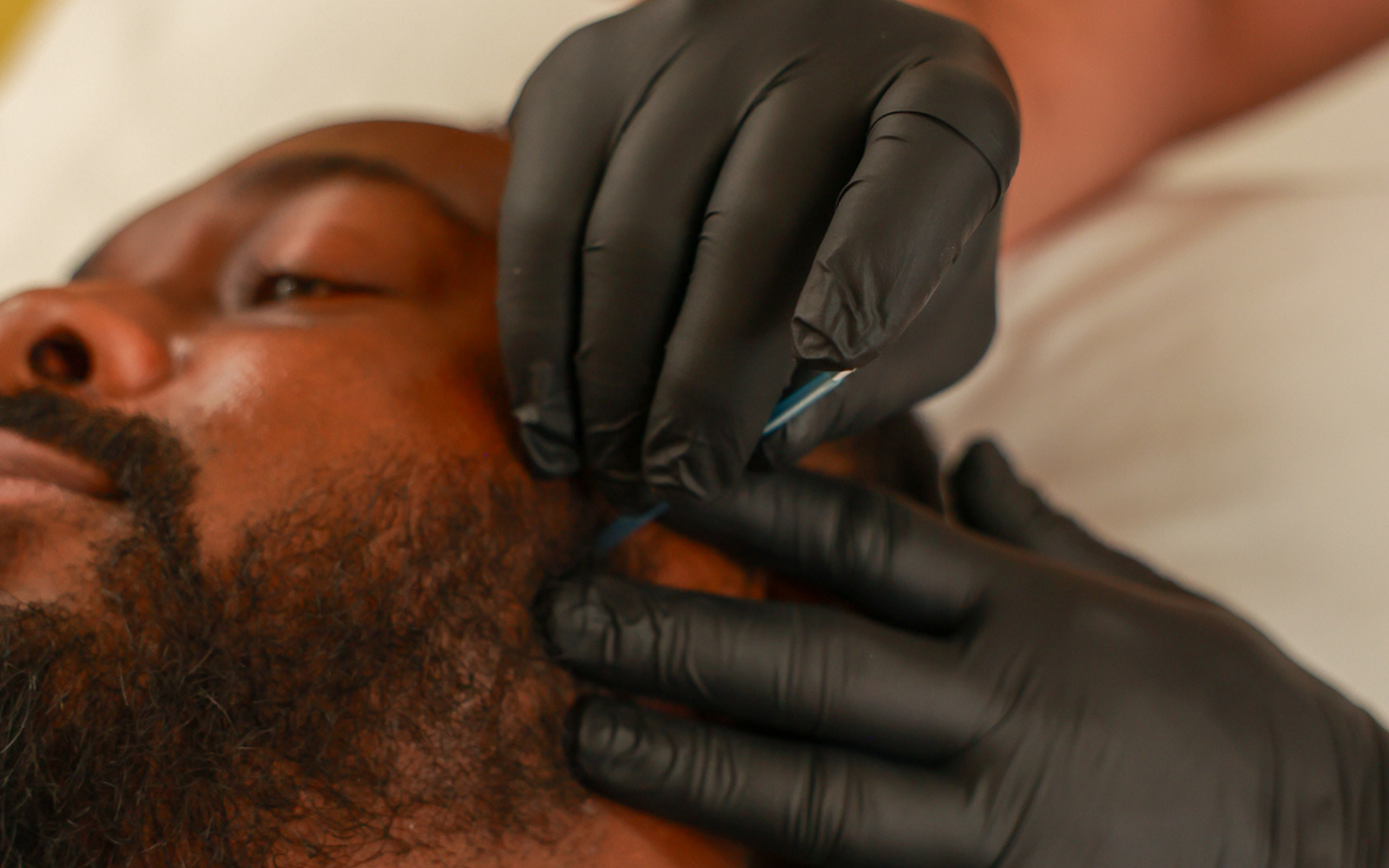
Whether you’re dealing with a nagging shoulder, recurring knee pain, or just want to play better tennis for longer, our doctoral-level team uses dry needling, manual therapy, BFR (blood flow restriction training), and NEUBIE neuromuscular technology to get you there faster.
References
- Elliot B. Biomechanics of the Tennis Groundstrokes: Implications for Strength Training. Strength & Conditioning Journal. 2009. https://journals.lww.com/nsca-scj/fulltext/2009/08000/biomechanics_of_the_tennis_groundstrokes_.5.aspx
- Sánchez-Pay A, et al. A conceptual field-based framework for lower–upper body kinetic chain assessment in the tennis serve using IMUs and portable force plates. Frontiers in Sports and Active Living. 2025. https://pmc.ncbi.nlm.nih.gov/articles/PMC13095676/
- Hettler J, et al. Rotational medicine ball throws: a unique skill or a general measure of power in tennis and golf athletes. Sport Performance & Science Reports. 2024. https://sportperfsci.com/wp-content/uploads/2024/12/SPSR245_Hettler.pdf
- Baiget E, et al. The effects of strength and conditioning interventions on serve speed in tennis players: a systematic review and meta-analysis. Frontiers in Physiology. 2024. https://www.frontiersin.org/journals/physiology/articles/10.3389/fphys.2024.1469965/full
- Dello Iacono A, et al. Exercise Technique: The Pallof Press. Strength & Conditioning Journal. 2022. https://repository.mdx.ac.uk/download/6f5fd7d2adfe4a20dc7f2356f64149445d9c19598d879847003cd94c6cc578ed/1307933/Pallof%20Press%20(SCJ).pdf
- Irawan R, et al. Biomechanical Kinetic Chain Analysis of Service Motion for Tennis. Physical Education Theory and Methodology. 2025. https://tmfv.com.ua/journal/article/download/3330/1858/11499
- Swinton PA, et al. A Biomechanical Analysis of Straight and Hexagonal Barbell Deadlifts Using Submaximal Loads. Journal of Strength and Conditioning Research. 2011;25(7):2000–2009.
- Camara KD, et al. An Examination of Muscle Activation and Power Characteristics While Performing the Deadlift Exercise with Straight and Hexagonal Barbells. Journal of Strength and Conditioning Research. 2016;30(5):1183–1188.
- Distefano LJ, et al. Gluteus Medius: Applied Anatomy, Dysfunction, Assessment, and Progressions. Strength & Conditioning Journal. 2008. https://journals.lww.com/nsca-scj/fulltext/2008/10000/gluteus_medius__applied_anatomy,_dysfunction,.7.aspx
- Behan FP, et al. The Effects of Nordic Hamstring Exercise on Performance and Injury in the Lower Extremities: An Umbrella Review. Healthcare. 2024;12(15):1462. https://www.ncbi.nlm.nih.gov/pmc/articles/PMC11311354/
- van Dyk N, Behan FP, Whiteley R. Including the Nordic hamstring exercise in injury prevention programmes halves the rate of hamstring injuries: a systematic review and meta-analysis of 8459 athletes. British Journal of Sports Medicine. 2019. https://pubmed.ncbi.nlm.nih.gov/27752982/
- Vashishtha P, et al. Effect of Nordic Strengthening and Hamstrings Muscles Exercises. International Journal of Health Sciences and Research. 2025. https://www.ijhsr.org/IJHSR_Vol.15_Issue.5_May2025/IJHSR32.pdf
- Saini SS, Shah SS, Curtis AS. Scapular Dyskinesis and the Kinetic Chain: Recognizing Dysfunction and Treating Injury in the Tennis Athlete. Current Reviews in Musculoskeletal Medicine. 2020. https://pubmed.ncbi.nlm.nih.gov/32827302/
- Navarro-Santana MJ, et al. Scapular Dyskinesis, Glenohumeral Internal Rotation, and Pectoralis Minor Length in Male Elite Tennis Players. International Journal of Sports Physical Therapy. 2025. https://ijspt.scholasticahq.com/article/160511
- Werthel JD, et al. Impact of arm dominance and backhand technique on shoulder mobility and rotator cuff abnormalities in senior high-level tennis players. Orthopaedics & Traumatology: Surgery & Research. 2026. https://www.sciencedirect.com/science/article/pii/S1877056826000629
- Moreno-Pérez V, et al. Comparison of shoulder rotation range of motion in professional tennis players with and without history of shoulder pain. Journal of Science and Medicine in Sport. 2014. https://www.sciencedirect.com/science/article/abs/pii/S1356689X14001908