If you are a runner, lifter, climber, yogi, cyclist, or active adult in Austin, chances are you have felt “tight” before. Maybe your hips feel restricted in yoga, your calves tighten up on a run around Lady Bird Lake, or your shoulders feel stiff after lifting or climbing.
Most people respond the same way: stretch more.
And sometimes stretching helps. It can improve range of motion, reduce stiffness, and feel good in the moment. But if the same area keeps tightening back up over and over again, the answer usually is not just more stretching. Research shows that range of motion can improve with stretching, but it can also improve with resistance training, and in many cases strength training performs similarly to stretching for flexibility gains.
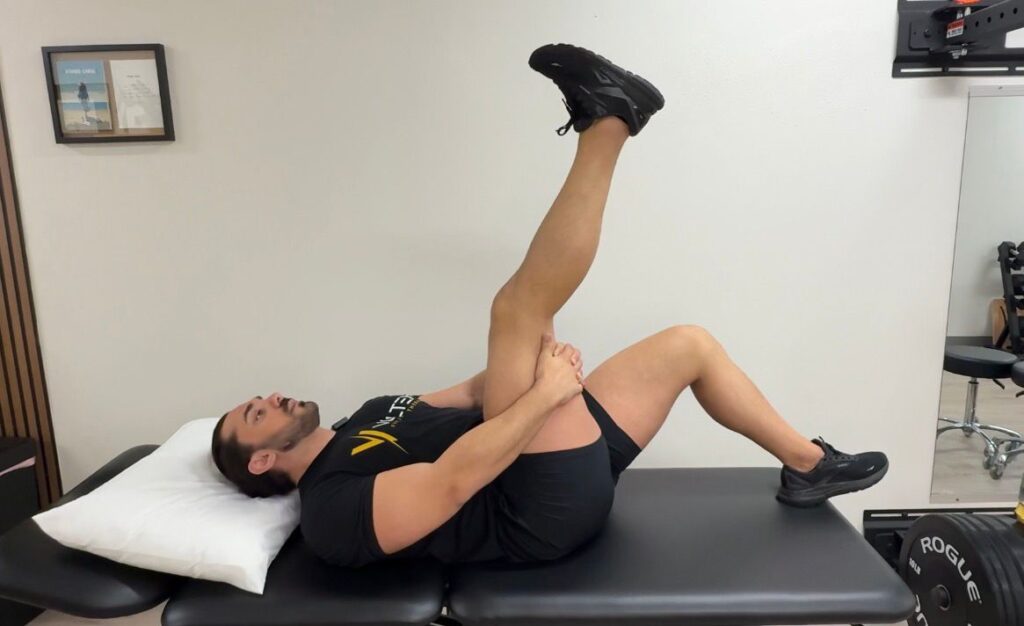
At Voltex Physical Therapy, we often see people who have been stretching their hips, hamstrings, calves, or shoulders for months with only temporary relief. That does not mean stretching is bad. It usually means the body needs more than passive mobility work. It often needs better strength, motor control, and confidence in the positions that currently feel restricted.
Tightness is not always a flexibility problem
“Tightness” is a real sensation, but it does not always mean a muscle is physically short. Research suggests range of motion is influenced not only by tissue stiffness, but also by stretch tolerance—in other words, how much stretch your body will allow before it says, “that’s enough.” In some people, especially women in one study, range of motion was related more to tolerance of the stretch than to passive muscle stiffness itself.
That matters because many active people assume every tight feeling means they need to force more length into the tissue. In reality, persistent tightness can be influenced by several factors, including local stiffness, fatigue, pain, load intolerance, altered movement patterns, and protective neuromuscular responses. Pain and perceived threat can change the way the body moves, ranging from subtle compensation patterns to muscle spasm and avoidance.
Why the same muscle keeps feeling tight
A muscle that keeps “locking on” is often doing extra work. Sometimes it is trying to help control a joint or movement that your body does not yet trust. Sometimes it is compensating for poor load distribution, reduced strength, or a movement pattern that keeps overusing the same tissues.
This is one reason people can stretch every day and still feel tight again by the afternoon. The temporary symptom changes, but the reason the body keeps returning to that pattern does not. That is why good rehab is not just about making a muscle longer. It is about improving how the whole system manages force and movement.
Flexibility helps — but control matters too
There is good evidence that stretching can increase range of motion over time. There is also good evidence that resistance training can do the same, especially when performed through a full range of motion with external load. Some systematic reviews have even found no meaningful difference between stretching and resistance training for improving flexibility outcomes.
That is a big deal for active adults and athletes.
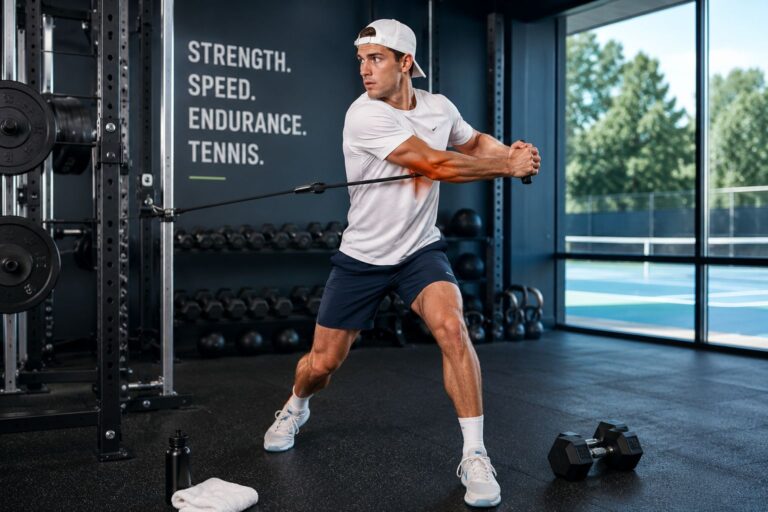
It means that if your hips, ankles, or shoulders always feel tight, the missing piece may not be “more mobility work.” The missing piece may be learning how to own that motion with strength. When you build strength through positions that used to feel restricted, your body often becomes more comfortable there. That is one reason progressive strengthening through full ranges can be so effective for people who feel constantly stiff.
The hip is a perfect example
The hip needs both mobility and control. If the hip does not move well, the low back, knee, or surrounding muscles often pick up the slack. Research on people with low back pain has found meaningful differences in hip range of motion, hip muscle strength, and muscle activation compared to people without low back pain.
That does not mean every tight hip causes back pain, and it does not mean every hip problem is solved with strengthening alone. But it does support what we see clinically every day: when the hip is not moving or controlling load well, people often feel tightness, pinching, or recurring tension in the surrounding area. Systematic reviews suggest hip strengthening may help reduce pain and disability in some people with low back pain, although the certainty of that evidence is still limited.
Shoulders tell a similar story
Shoulders are another area where people often chase flexibility when what they really need is better control. In people with shoulder pain, studies have shown altered timing and recruitment of the muscles around the shoulder, and motor-control-based exercise programs have been associated with improved pain and function.
So if your shoulders always feel “tight,” the answer may not be endlessly stretching your pecs or lats. Sometimes the better strategy is improving how the shoulder blade, rotator cuff, trunk, and rib cage work together.
Why stretching alone sometimes falls short
Stretching is not the enemy. It can be useful, especially when paired with the right program. But by itself, it may fall short when:
- The muscle is overworking
If a tissue is handling more load than it should, stretching may feel good temporarily without changing why it keeps tightening up. - You have motion, but you do not have control
A lot of active people in Austin are not lacking movement options. They are lacking strength and confidence at the ends of those ranges. - Your body is protecting a painful or sensitive area
Pain changes movement behavior. When that happens, muscles may brace, co-contract, or compensate in ways that make you feel stiff even when tissue length is not the main issue.
The bottom line
If you always feel tight in the same spots, it does not automatically mean you need to stretch harder or longer.
Sometimes the real issue is that your body does not feel strong, stable, or efficient enough in the positions you are asking it to handle. In those cases, the best answer is often a combination of the right mobility work, the right strengthening, and the right movement retraining. Research supports that both stretching and strengthening can improve range of motion, and ongoing symptoms are often better understood when we also consider motor control, pain sensitivity, and load tolerance.
Your tight muscles are not always asking for more stretching.
Sometimes they are asking for a better plan.
Looking for Physical Therapy in Austin for chronic tightness, mobility issues, or recurring pain?
At Voltex Physical Therapy, we help active adults and athletes in Austin get to the root of stiffness, pain, and recurring movement limitations. Our one-on-one sessions are designed to combine hands-on care, movement assessment, strength training, and performance-focused rehab so you can keep doing what you love — without pain.
Call or text 512-200-4067 or email hello@voltexpt.com to book your evaluation.
Struggling with stiffness or recurring pain?
Start with Orthopedic Manual Therapy—schedule your evaluation now.
Research supporting this article
Here are the main papers I used to support the blog’s key claims:
Afonso J, et al. Strength Training versus Stretching for Improving Range of Motion: A Systematic Review and Meta-Analysis. Healthcare (Basel). 2021. Found that strength training can improve range of motion similarly to stretching. (PubMed)
Alizadeh S, et al. Resistance Training Induces Improvements in Range of Motion: A Systematic Review and Meta-Analysis. Sports Medicine. 2023. Reported that resistance training with external loads improves ROM, with no significant difference versus stretch training. (PubMed)
Konrad A, et al. Chronic effects of stretching on range of motion with consideration of potential moderating variables: A systematic review with meta-analysis. Journal of Sport and Health Science. 2024. Supports that stretching can improve ROM over time. (PubMed)
Merkle SL, et al. The interaction between pain and movement. Journal of NeuroEngineering and Rehabilitation. 2018. Reviews how pain can drive protective movement adaptations, compensation, guarding, and spasm. (PMC)
Pizol GZ, et al. Hip biomechanics in patients with low back pain, what do we know? A systematic review. 2024. Found changes in hip ROM, hip strength, and muscle activation in people with low back pain. (PubMed)
Miyamoto N, et al. Associations of passive muscle stiffness, muscle stretch tolerance, and muscle slack angle with range of motion. 2018. Suggests ROM is influenced by both stiffness and stretch tolerance, not just tissue length alone. (PMC)
Ceballos-Laita L, et al. The effectiveness of hip interventions in patients with low-back pain: A systematic review and meta-analysis. 2023. Suggests hip strengthening may help pain and disability in some low back pain populations, though evidence certainty is low. (PubMed)
Santamaría G, et al. Effect of Hip Muscle Strengthening Exercises on Pain and Disability in Patients with Non-Specific Low Back Pain: A Systematic Review. 2023. Supports the role of hip strengthening as part of rehab for some patients with LBP. (PubMed)
Worsley P, et al. Motor control retraining exercises for shoulder impingement: effects on function, muscle activation, and biomechanics in young adults. 2013. Supports the role of motor control work for pain and function in shoulder rehab. (PubMed)