
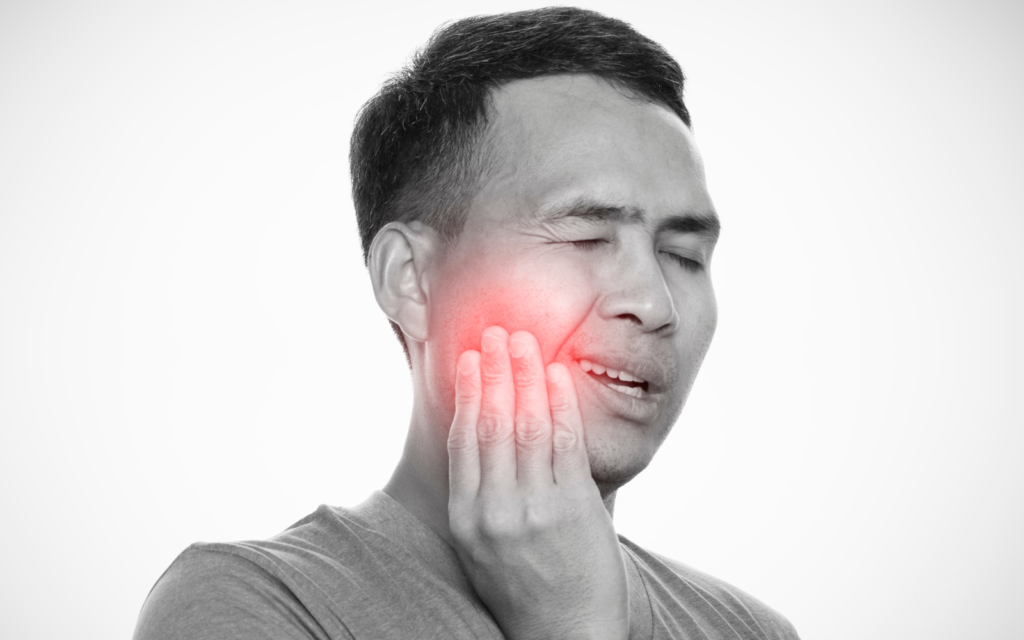
You Wake Up Fine — Then Your Jaw Reminds You It Wasn’t
You open your eyes, and within the first few minutes, it starts. A dull ache along your jaw line. Tightness in your temples. Maybe a headache already building before you’ve had your first sip of coffee. Your jaw feels stiff, tired, or locked up — like it worked an overnight shift you didn’t authorize.
For many people in Austin, this is their daily reality. They’ve had the dentist fit them for a night guard, maybe tried a muscle relaxant, and still wake up feeling like they chewed through a brick wall in their sleep. They’re told this is bruxism — and that’s true — but they’re rarely told why it’s happening, what the night guard actually does and doesn’t do, and what it would take to actually fix it.
This article answers all of that.
Dealing with jaw pain in Austin? See how our Doctors of Physical Therapy treat it one-on-one on our TMJ physical therapy in Austin page, or book a free 15-minute consult.
What Is Sleep Bruxism — and Why Does Morning Feel Worst?
Sleep bruxism is defined as a repetitive jaw muscle activity during sleep characterized by clenching or grinding of the teeth. Unlike awake bruxism — which patients can sometimes catch and self-correct — sleep bruxism is entirely involuntary and largely unconscious. You don’t know you’re doing it. Your sleep partner, however, almost certainly does.
The reason morning is the worst time of day for bruxism sufferers comes down to simple physiology: the masseter, temporalis, and medial pterygoid muscles have been contracting — sometimes forcefully, for hours — while you slept. By the time you wake up, those muscles are fatigued, hypertonic, and often harboring activated trigger points. The pain you feel in the morning is the accumulated result of hours of unopposed muscular loading with no recovery.
Classic morning presentations of sleep bruxism include:
Jaw aching or soreness, typically worse on one side but can be bilateral
Temporal headaches — pain at the sides of the head or across the forehead, present before you get out of bed
Jaw stiffness or limited mouth opening — difficulty opening fully for the first 30–60 minutes after waking
Tooth soreness or sensitivity, particularly on the back teeth
Neck tightness and upper shoulder tension, already present on waking
A sensation of jaw fatigue — as if you’ve been chewing for hours
In more severe cases, patients describe their jaw locking briefly upon waking — a transient limitation in mouth opening that resolves within minutes as the muscles warm up. This locking is not the same as true disc locking; it is a muscular phenomenon, driven by the hypertonic and fatigued state of the jaw closers after a night of bruxism.
StatPearls. (2024). Bruxism Management. https://www.ncbi.nlm.nih.gov/books/NBK482466/
Uchima Koecklin et al. (2024). The neural substrates of bruxism: current knowledge and clinical implications. PMC. https://pmc.ncbi.nlm.nih.gov/articles/PMC11473305/
Important distinction: morning jaw pain that improves over the first hour of the day — and that is absent or minimal by afternoon — is strongly suggestive of sleep bruxism as the primary driver. Pain that is constant or worse later in the day typically has additional awake-bruxism or postural contributors.
Why Does Sleep Bruxism Happen? The Neuroscience Behind the Grind
Bruxism is not simply a bad habit you can decide to stop. Its etiology is multifactorial — driven by a complex interaction of neurological, psychological, physiological, and lifestyle factors. Understanding why your brain is activating your jaw muscles during sleep is the key to understanding why a passive dental appliance, on its own, rarely resolves it.
The Role of the Central Nervous System
Sleep bruxism is now understood to be primarily a centrally mediated behavior — meaning it originates in the brain, not in the jaw itself. During sleep, the jaw muscles receive rhythmic activation signals from the central nervous system, likely related to normal sleep arousal mechanisms. In people with bruxism, these signals are amplified or dysregulated, producing the forceful, prolonged contractions that cause morning pain.
Research has consistently linked sleep bruxism to dopaminergic pathways in the brain — the same neurotransmitter system involved in stress response, movement regulation, and reward. This is part of why certain medications (particularly SSRIs, stimulants, and some antipsychotics) can worsen bruxism, and why stress is such a reliable trigger.
Stress, Anxiety, and the Austin Factor
Psychological stress is one of the most well-documented triggers for both sleep and awake bruxism. Elevated life stress and anxiety increase nocturnal jaw muscle EMG activity — meaning a stressful week at work, a demanding project, or a period of anxiety directly translates into harder, more frequent clenching during sleep. For Austin’s high-achieving, high-stress professional population, this connection is clinically relevant and frequently underappreciated.
The masseter muscle, in particular, is one of the primary muscles the body recruits in response to psychosocial stress. When the nervous system is chronically activated — whether from work pressure, device overuse, poor sleep, or ongoing pain — the jaw becomes a preferential tension storage site. Treating bruxism without addressing the nervous system load is treating the output, not the input.
Sleep Disorders: The Connection Most Patients Miss
An important and underrecognized driver of sleep bruxism is obstructive sleep apnea (OSA). Research has documented a significant association between sleep bruxism and OSA — with the prevailing theory being that bruxism episodes may serve as a protective mechanism to re-open the airway during partial obstruction. Patients who present with severe morning jaw pain, combined with daytime fatigue, snoring, or reported apneic episodes, warrant evaluation for OSA before bruxism treatment is finalized.
If your bruxism hasn’t responded to conservative care, ask your provider whether a sleep study is appropriate. Treating the bruxism without treating the underlying sleep disorder will produce incomplete and frustrating results.
Uchima Koecklin et al. (2024). The neural substrates of bruxism: current knowledge and clinical implications. PMC. https://pmc.ncbi.nlm.nih.gov/articles/PMC11473305/
Kuang B, et al. (2022). Associations between sleep bruxism and other sleep-related disorders in adults: a systematic review. Sleep Med, 89:31–47.
The Night Guard: What It Does — and What It Doesn’t
Let’s be clear upfront: a well-made night guard is a valuable tool in bruxism management. It protects your teeth from wear, distributes the occlusal forces of clenching across a larger surface area, and can modestly reduce compressive loading on the TMJ. Your dentist was right to recommend one.
But a night guard is passive protective equipment. Here is what it cannot do:
It cannot reduce the neural drive that is causing your muscles to clench in the first place
It cannot release the trigger points that have accumulated in your masseter, temporalis, and pterygoid muscles from months or years of loading
It cannot restore normal resting muscle tone to an overloaded masticatory system
It cannot correct the postural contributors — forward head position, upper cervical restriction, hyoid tension — that increase the baseline load on the jaw muscles
It cannot address the stress physiology, sleep quality issues, or nervous system dysregulation driving the behavior
Research confirms this gap. A systematic review comparing occlusal splint therapy to physiotherapy for TMD concluded that there is no clear evidence that occlusal splints are superior to physiotherapy — and that in long-term follow-up, combined approaches consistently outperform either treatment alone. The patients who do best are those who use a night guard and receive neuromuscular physical therapy to address the muscular, postural, and behavioral dimensions of bruxism simultaneously.
Occlusal splints — types and effectiveness in temporomandibular disorder management. ScienceDirect. 2023. https://www.sciencedirect.com/science/article/pii/S1013905222001754
Bruxism Management: A Comprehensive Review. Clinical Medical Reviews and Case Reports. https://www.clinmedjournals.org/articles/cmrcr/clinical-medical-reviews-and-case-reports-cmrcr-7-316.php
The night guard protects your teeth. Physical therapy rehabilitates the muscles, the joints, and the nervous system that are driving the behavior. Both have a role — but one without the other leaves a significant portion of the problem untreated.
What Actually Happens in Your Jaw Muscles Overnight
To understand why morning jaw pain is so consistent and predictable in bruxism sufferers, it helps to understand what happens at the muscular level during a night of heavy clenching.
Trigger Point Activation
Sustained, forceful muscle contraction — the kind that happens during nocturnal bruxism — creates localized areas of hypoxia (oxygen deprivation) within the muscle. These hypoxic zones become trigger points: hyperirritable spots in the muscle tissue that produce local pain and referred pain to distant sites. The masseter is one of the most trigger-point-dense muscles in the body in patients with TMD, and its trigger points refer pain to the cheek, the teeth, the ear, and below the eye. The temporalis refers to the temple and across the forehead. After a night of bruxism, these trigger points are activated and often exquisitely tender.
Muscle Fatigue and Metabolic Byproduct Accumulation
Prolonged muscle contraction without adequate recovery depletes local ATP stores and allows metabolic byproducts — including lactic acid and inflammatory mediators — to accumulate in the tissue. This is the same process that makes your legs sore after a hard run, but happening in your jaw overnight. The stiffness and achiness you feel in the first hour of the morning is partly this metabolic fatigue signature resolving as the muscles warm up, blood flow improves, and byproducts clear.
Cervical Spillover
The jaw muscles don’t work in isolation. The masseter and temporalis are mechanically and neurologically linked to the cervical musculature — particularly the upper trapezius, suboccipitals, and SCM. During heavy bruxism episodes, co-contraction of the neck muscles is common. By morning, many bruxism patients have not just jaw tightness but significant upper cervical and shoulder girdle tension as well. This is why the best bruxism treatment programs address the entire cervicalmandibular system, not just the jaw.
Clinical pattern: if your neck is tight every morning alongside your jaw — and both improve over the first hour of the day — your bruxism is almost certainly recruiting your cervical muscles as well. Treatment that doesn’t address the neck will leave a significant portion of your morning pain unresolved.
How We Treat Morning Jaw Pain at Voltex PT in Austin
At Voltex Physical Therapy on North Lamar in Austin, our approach to sleep bruxism and morning jaw pain is built around one principle: treat the neuromuscular system driving the problem, not just the joint taking the damage. That means an integrated plan combining dry needling, manual therapy, postural rehabilitation, and behavioral guidance — all delivered one-on-one by a doctoral-level PT who understands the full complexity of the jaw-neck system.
Dry Needling: Clearing the Trigger Points That Loaded Up Overnight
The single most direct and effective intervention we have for the accumulated muscle tension of sleep bruxism is trigger point dry needling. By inserting a thin monofilament needle directly into active trigger points in the masseter, temporalis, medial pterygoid, suboccipitals, and upper trapezius, we elicit a local twitch response that immediately begins to reset the muscle — reducing resting tone, improving local circulation, and clearing the sensitized motor endplates that perpetuate ongoing pain.
For bruxism patients, this often produces dramatic relief of morning pain patterns within the first few sessions. The trigger points that have been loading and re-loading through weekly bruxism cycles are directly addressed — rather than waiting for them to partially resolve on their own each morning, only to be reactivated the following night.
Manual Therapy: Restoring the Jaw and Cervical Spine
Following dry needling, manual therapy to the TMJ and cervical spine restores normal joint mechanics, reduces compressive forces on the joint, and addresses the cervical dysfunction that amplifies jaw loading. Techniques include TMJ distraction and lateral glide mobilization, intraoral pterygoid release, suboccipital release, and C0–C2 joint mobilization. For patients whose bruxism is partly driven by a restricted upper cervical spine feeding tension into the jaw, cervical mobilization can produce rapid and lasting reduction in morning symptoms.
Postural Correction: Reducing the Baseline Load
Forward head posture — the dominant postural fault we see in Austin’s desk-working population — increases the compressive load on both the cervical spine and the jaw. Correcting this pattern through deep cervical flexor activation, thoracic extension work, and scapular stabilization reduces the baseline muscular tension that the bruxism behavior is then superimposed on. Patients with both bruxism and significant forward head posture consistently see greater and more durable improvements when postural correction is included in their treatment program.
Patient Education and Behavioral Guidance
We also work with patients on the behavioral and lifestyle dimensions of bruxism — because the neuromuscular treatment only holds if the inputs feeding the system are also addressed. This includes:
Daytime clenching awareness and habit interruption — many bruxism patients also clench during the day without realizing it, significantly increasing total jaw loading
Sleep hygiene optimization — poor sleep quality increases bruxism severity; addressing sleep architecture is part of comprehensive management
Stress load and nervous system regulation — not as a vague suggestion but as concrete guidance on what increases nocturnal jaw EMG activity and what reduces it
Diet modification during acute flares — softer food choices reduce the total mechanical load on recovering jaw muscles
Coordination with your dentist — we work alongside your dental team, not instead of them; the night guard and the neuromuscular rehabilitation are complementary, not competing
De Paula Gomes CF, et al. (2020). Combined physiotherapy and occlusal splint therapy for sleep bruxism produced better outcomes than splint alone. Referenced in: Bruxism Management: A Comprehensive Review. Clinical Medical Reviews.
StatPearls. (2024). Bruxism Management — physical therapy and combined approaches. https://www.ncbi.nlm.nih.gov/books/NBK482466/
Frequently Asked Questions: Morning Jaw Pain in Austin
Is morning jaw pain always bruxism?
Morning jaw pain is the most common presentation of sleep bruxism, but it can also arise from disc displacement (the disc shifts position during sleep and takes time to reduce on waking), arthritic joint changes, or sleep position compressing the jaw. A physical therapy evaluation can differentiate between these presentations. If your pain is worst in the first 30–60 minutes and improves significantly through the morning, a muscular/bruxism origin is most likely.
My night guard is custom-fitted and expensive — why isn’t it working?
Because a night guard, even a well-made one, addresses only one dimension of a multidimensional problem. It protects your teeth and modestly reduces joint loading — but it does not treat the trigger points, the resting muscle hypertonicity, the postural load, or the neural drive behind the bruxism behavior. If your symptoms persist despite consistent night guard use, the neuromuscular drivers are still active and need direct treatment.
Can stress management alone fix my bruxism?
Stress management is an important component of comprehensive bruxism care — but it rarely resolves the problem independently. By the time a patient presents with morning jaw pain, trigger points have accumulated, cervical mechanics may be compromised, and postural patterns may be contributing. These need direct physical intervention alongside any behavioral or stress-reduction work. Think of it as parallel tracks: the muscular treatment and the nervous system regulation happen simultaneously, not sequentially.
How quickly will I see improvement?
Most patients with primary sleep bruxism and morning jaw pain see meaningful reduction in morning symptoms within 3–6 sessions of dry needling and manual therapy. The consistency of improvement depends on the chronicity of the condition, the degree of cervical involvement, and whether daytime clenching habits are also being addressed. Longer-standing cases with significant trigger point load and postural dysfunction take longer but respond reliably to consistent treatment.
Where is Voltex PT in Austin?
We’re at 5555 N Lamar Blvd, Suite C105, Austin, TX 78751 — on the North Lamar corridor, easily accessible from Hyde Park, North Loop, Rosedale, The Triangle, and Central Austin.
Stop Starting Every Day in Pain. We Can Help.
If you’re waking up every morning with jaw tightness, temple headaches, or a stiff jaw that takes an hour to loosen — that’s not normal, and it’s not permanent. Sleep bruxism is highly treatable when approached correctly. At Voltex PT in Austin, we treat the whole neuromuscular system behind your morning pain — not just the joint that’s complaining about it.
References
StatPearls. (2024). Bruxism Management. https://www.ncbi.nlm.nih.gov/books/NBK482466/
Uchima Koecklin KH, Aliaga-Del Castillo A, Li R. (2024). The neural substrates of bruxism: current knowledge and clinical implications. PMC. https://pmc.ncbi.nlm.nih.gov/articles/PMC11473305/
Kuang B, et al. (2022). Associations between sleep bruxism and other sleep-related disorders in adults: a systematic review. Sleep Med, 89:31–47.