
If you’ve been playing tennis for years and your dominant shoulder has started feeling stiff, impingy, or just not quite right — especially during or after serves and overheads — there’s a good chance glenohumeral internal rotation deficit (GIRD) is part of the picture. It’s one of the most common shoulder conditions we see in tennis players at Voltex Physical Therapy in Austin, and it’s also one of the most underdiagnosed.
GIRD doesn’t always announce itself with sharp pain. It often starts as subtle stiffness in the back of the shoulder, a slight loss of range on your dominant side, or a nagging feeling of tightness that never quite goes away. Left unaddressed, it creates a biomechanical cascade that puts your rotator cuff, labrum, and joint surface at serious risk.
This post breaks down what GIRD actually is, what’s happening in the tissue, which tennis shots put you at greatest risk, and what the evidence says about fixing it — without surgery.
What Is GIRD — and Why Does Tennis Cause It?
GIRD stands for glenohumeral internal rotation deficit. It refers to a loss of internal rotation range of motion (IROM) in the dominant shoulder compared to the non-dominant side. When that difference exceeds 20°, pathological injury risk rises sharply. [1, 2]
GIRD affects overhead athletes as a group because repetitive forceful overhead motion gradually remodels the shoulder. The deceleration phase of striking places enormous eccentric demand on the posterior rotator cuff and posterior capsule. Over time, the posterior inferior capsule thickens and contracts — restricting the normal posterior glide of the humeral head and reducing internal rotation on the dominant side. [3]
Tennis players face a compounded version of this problem compared to, say, a baseball pitcher. A pitcher delivers one type of throw repeatedly. A tennis player must produce high-velocity internal rotation through a wide variety of swing patterns — flat serves, kick serves, forehands, overheads — across a match that can last hours. This high-volume, multi-plane overhead loading accelerates posterior capsule tightening and makes GIRD particularly prevalent in competitive players. [4]
Studies in overhead athletes report GIRD prevalence rates between 30–65% in competitive players, with internal rotation loss most pronounced in the dominant shoulder. [1, 4]
What’s Actually Happening Inside the Shoulder
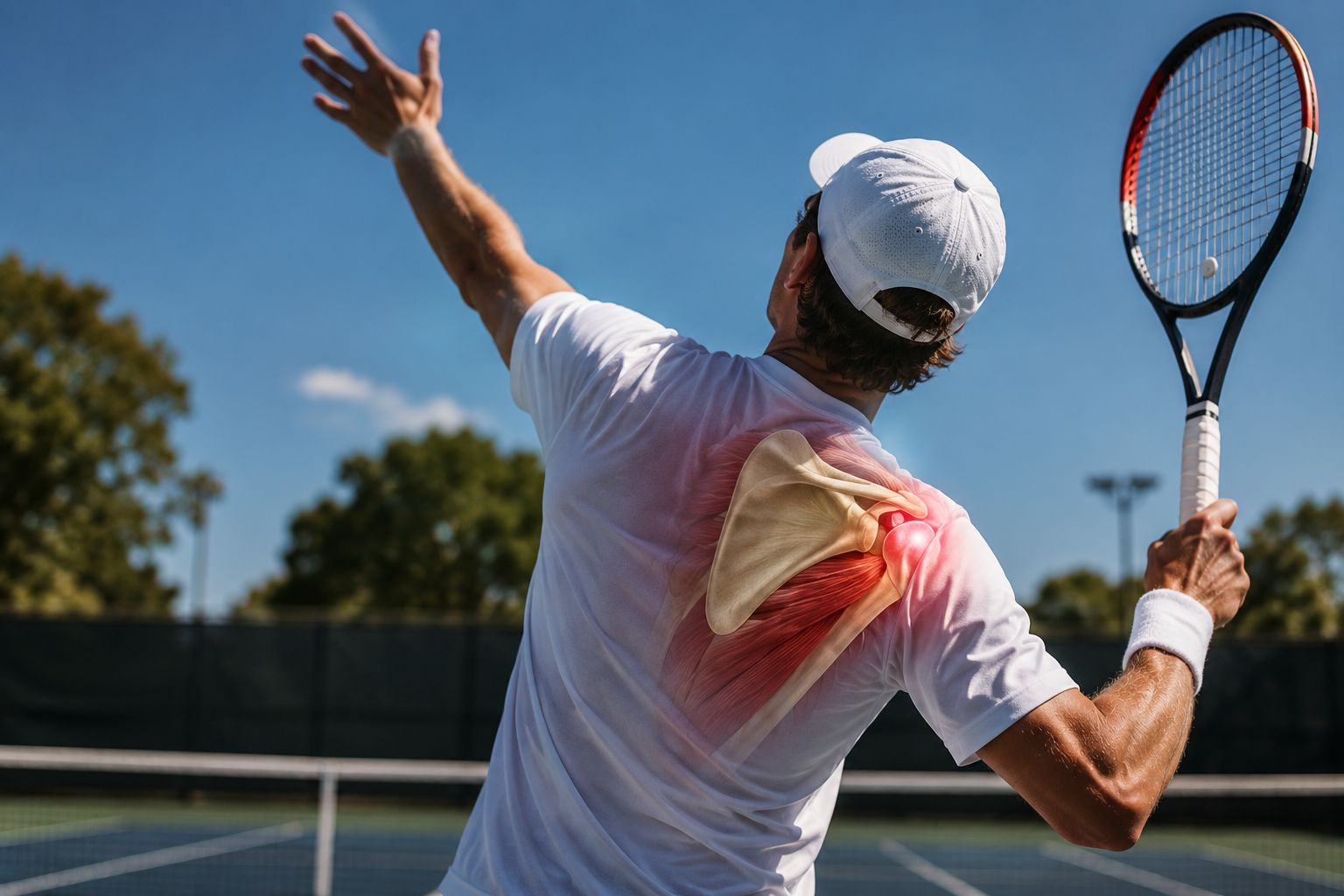
When the posterior capsule tightens, it creates what biomechanists describe as a cam effect. Rather than the humeral head gliding posteriorly during internal rotation as it should, it gets levered anteriorly and superiorly. This anterosuperior humeral head migration is the root of most GIRD-related shoulder pathology. [8]
The structures most at risk from this mechanical shift:
- Rotator cuff — supraspinatus and infraspinatus are compressed against the posterosuperior glenoid rim during internal impingement. [3, 5]
- Superior labrum (SLAP lesions) — the peel-back mechanism driven by anterosuperior migration puts the biceps anchor under abnormal stress, particularly during high-ER positions like late cocking. [6, 7]
- Subscapularis — as the primary internal rotator and anterior stabilizer, subscapularis weakness allows the anterior migration to go unchecked, creating a self-perpetuating cycle. [3]
The tight posterior capsule acts like a sling — instead of the humeral head rolling back as the arm rotates in, it gets levered forward. Every swing that demands internal rotation is now grinding through a compromised joint. [8]
Which Tennis Shots Are Most at Risk
Every groundstroke and serve involves some degree of internal rotation — but certain shots create far greater stress on a GIRD shoulder than others. [4]
The Serve — Highest Overall Risk
The most damaging stroke for a GIRD shoulder. The transition from maximum external rotation in late cocking to explosive internal rotation at ball contact creates peak internal impingement risk. A tight posterior capsule amplifies anterosuperior migration exactly at the moment of greatest joint stress. The serve should be the first stroke modified when GIRD is identified. [3, 4]
The Kick Serve
Requires extreme shoulder external rotation and abduction in the cocking phase. The posterior capsule is under maximal stretch, making the peel-back mechanism on the posterosuperior labrum more pronounced — this stroke carries the highest SLAP lesion risk of any tennis shot. [6, 7]
The Overhead Smash
Mirrors the serve biomechanically but is often performed from a less controlled, reactive position with less time for proper setup. GIRD limits the explosive internal rotation needed for pace, and the follow-through deceleration loads an already stressed posterior capsule. [4]
The Forehand
Modern topspin forehands finish with rapid internal rotation in a windshield-wiper pattern. With GIRD, the humeral head cannot track posteriorly during this motion, increasing impingement risk — particularly with high-RPM, heavy topspin shots. [3, 4]
The One-Handed Backhand
Less directly affected than the serve or forehand, but the follow-through requires external rotation of the dominant shoulder — which is compensatorily excessive in a GIRD shoulder, increasing posterior rotator cuff stress through a different mechanism. [4]
GIRD isn’t just a range of motion problem — it’s a mechanical problem that follows the arm through every swing pattern. You can’t out-technique a posterior capsule that won’t let the humeral head move the way it’s designed to.
How Do You Know If You Have GIRD?
GIRD is assessed by measuring glenohumeral internal rotation range of motion in both arms in a supine position, with the shoulder abducted to 90° and the scapula stabilized against the table. A side-to-side difference of more than 20° is considered clinically significant. [1, 2]
Common signs that GIRD may be affecting your game:
- Stiffness or tightness in the back of the dominant shoulder, especially after serving
- Loss of internal rotation when you try to reach behind your back on the dominant side
- A feeling of pinching or impingement at the top or back of the shoulder during the serve or overhead
- Reduced serve velocity or follow-through that feels restricted
- A history of labral pathology, rotator cuff irritation, or recurring posterior shoulder soreness
If any of these sound familiar, a proper shoulder assessment — including IROM measurement and total rotational motion (TROM) comparison — should be the starting point. This is part of every shoulder evaluation we perform at Voltex PT.
Evidence-Based Treatment for GIRD: What the Research Actually Supports
Conservative management of GIRD is well-supported by research. The goal is twofold: restore posterior glide arthrokinematics and improve posterior capsule extensibility. Combined approaches consistently outperform single-modality treatment. [14]
Stretching: Modified Sleeper Stretch and Cross-Body Stretch
These are the two most researched stretches for GIRD, and both have strong RCT-level evidence. [9, 10]
Modified Sleeper Stretch: Side-lying with the shoulder at 90° flexion and the scapula stabilized against the table. Gentle downward overpressure at the elbow encourages posterior capsule elongation. The modified version avoids the subacromial impingement risk of the traditional sleeper stretch. Target: 3 × 30 seconds, 5 days per week, 4–8 weeks.
Modified Cross-Body Stretch: Seated or standing. The arm is brought across the body in horizontal adduction while the opposite hand stabilizes the scapula at the acromion. This drives the humeral head posteriorly via capsular tension. RCT evidence shows equal internal rotation gains to the sleeper stretch. Target: 3 × 30 seconds, 5 days per week, 4–8 weeks. [9, 10]
A systematic review and meta-analysis of 16 RCTs confirmed that stretching protocols produce statistically significant improvements in both internal rotation and horizontal adduction range of motion in overhead athletes with GIRD. [11]
▶ EMBED VIDEO: Shoulder ER in Scaption — Voltex PT
Joint Mobilization: Posterior GH Glide and Inferior Distraction
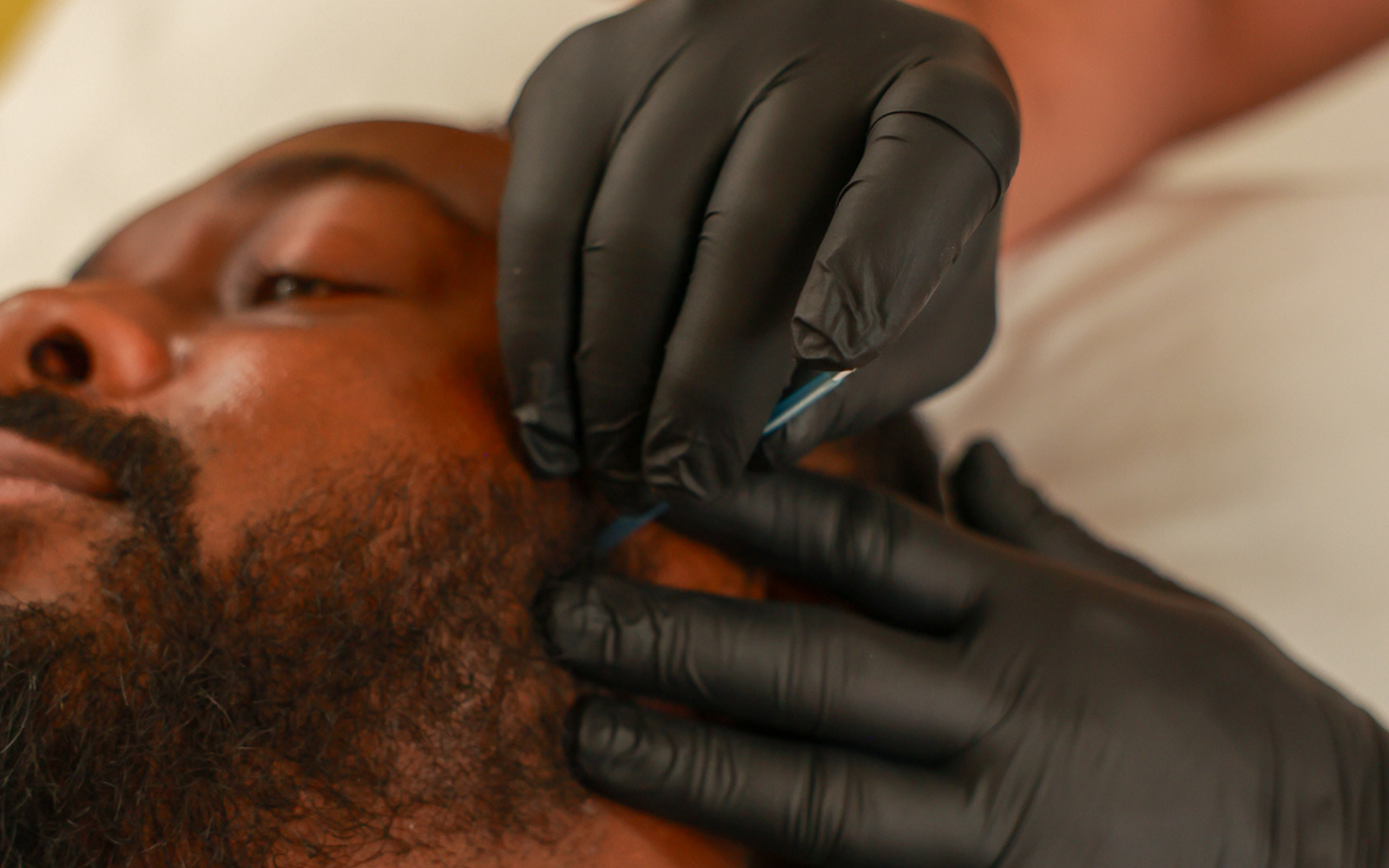
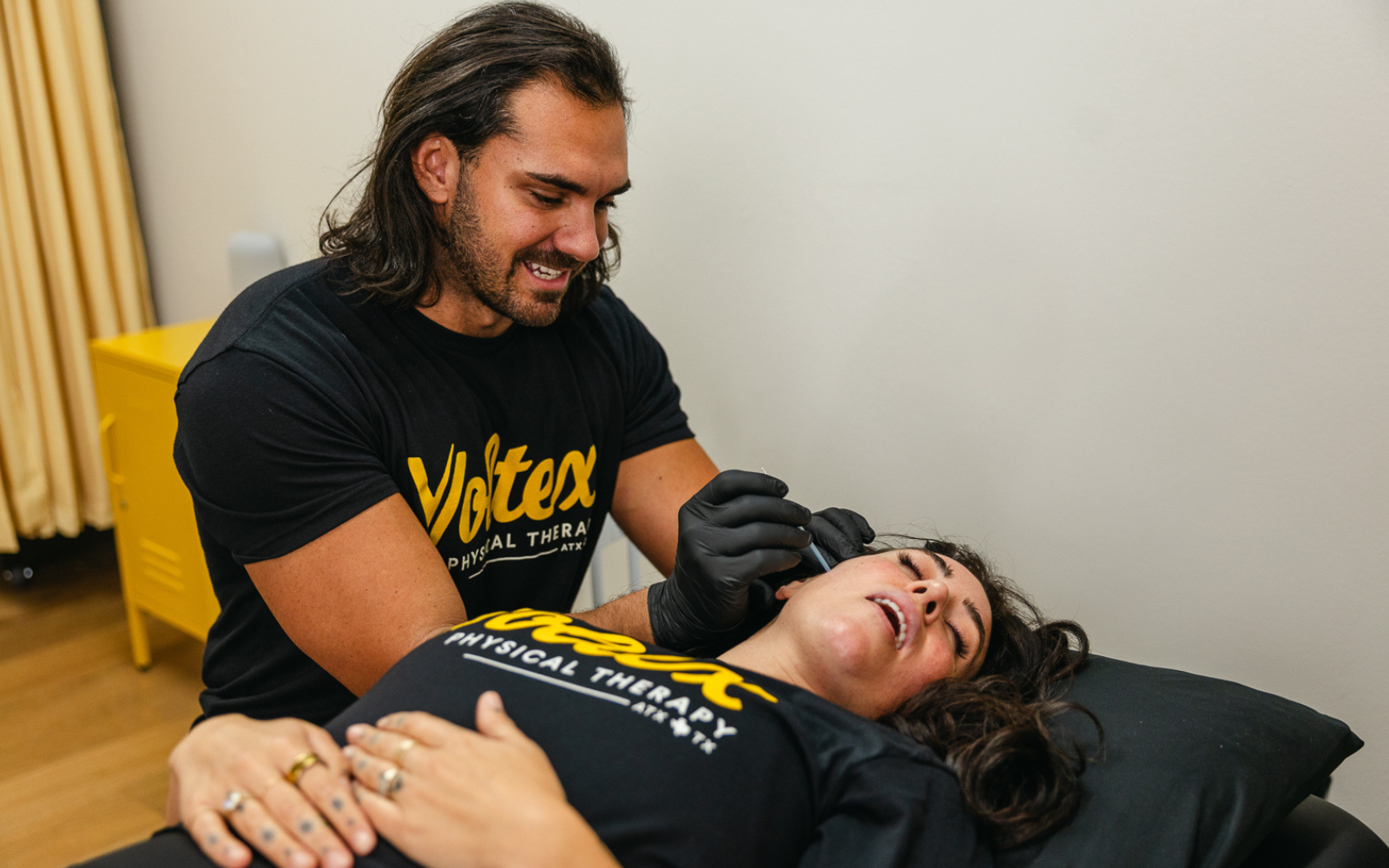
Manual therapy directed at the glenohumeral joint consistently produces greater internal rotation gains than stretching alone — and those gains are better retained at 4-week follow-up. [12]
Posterior GH glide (Maitland grade III–IV): Supine, with the therapist applying a posterior-to-anterior force directly to the humeral head to restore accessory glide. 2–3 minutes continuous, 2–3 sessions per week.
Inferior GH distraction: Long-axis distraction in the resting position to decompress the joint and reduce posterior capsule tension. Grade I–II traction, 60–90 seconds, used to prepare the joint before stretching and to increase the efficacy of subsequent capsular work.
This is where working with a manual therapist makes a significant difference — these mobilizations are not replicable through self-treatment, and their effect on recovery timeline is well-documented. [12, 14]
Strengthening and Neuromuscular Control
Stretching and mobilization restore range of motion — but without addressing the dynamic stability deficits that accompany GIRD, the problem tends to recur. Strengthening targets three key areas: [13, 14]
- Subscapularis activation (IR at 0°): The subscapularis is the primary internal rotator and a critical anterior stabilizer. Its deficit allows excessive anterior humeral migration. Begin with resisted internal rotation at 0° abduction, progressing to 90° as range improves. 3 × 15 reps with progressive resistance. [3]
- Prone Y, T, W (scapular stabilization): Targets lower and middle trapezius and posterior deltoid. GIRD rarely exists in isolation from scapular dyskinesis — restoring scapular upward rotation and posterior tilt reduces the mechanical impingement component. 3 × 12–15 reps, light load, high control.
- Side-lying external rotation: Restores the ER:IR strength ratio, which becomes imbalanced in GIRD and both perpetuates and compounds impingement risk. Target a 2:3 ER:IR ratio in overhead athletes. 3 × 15 reps, slow 3-second eccentric.
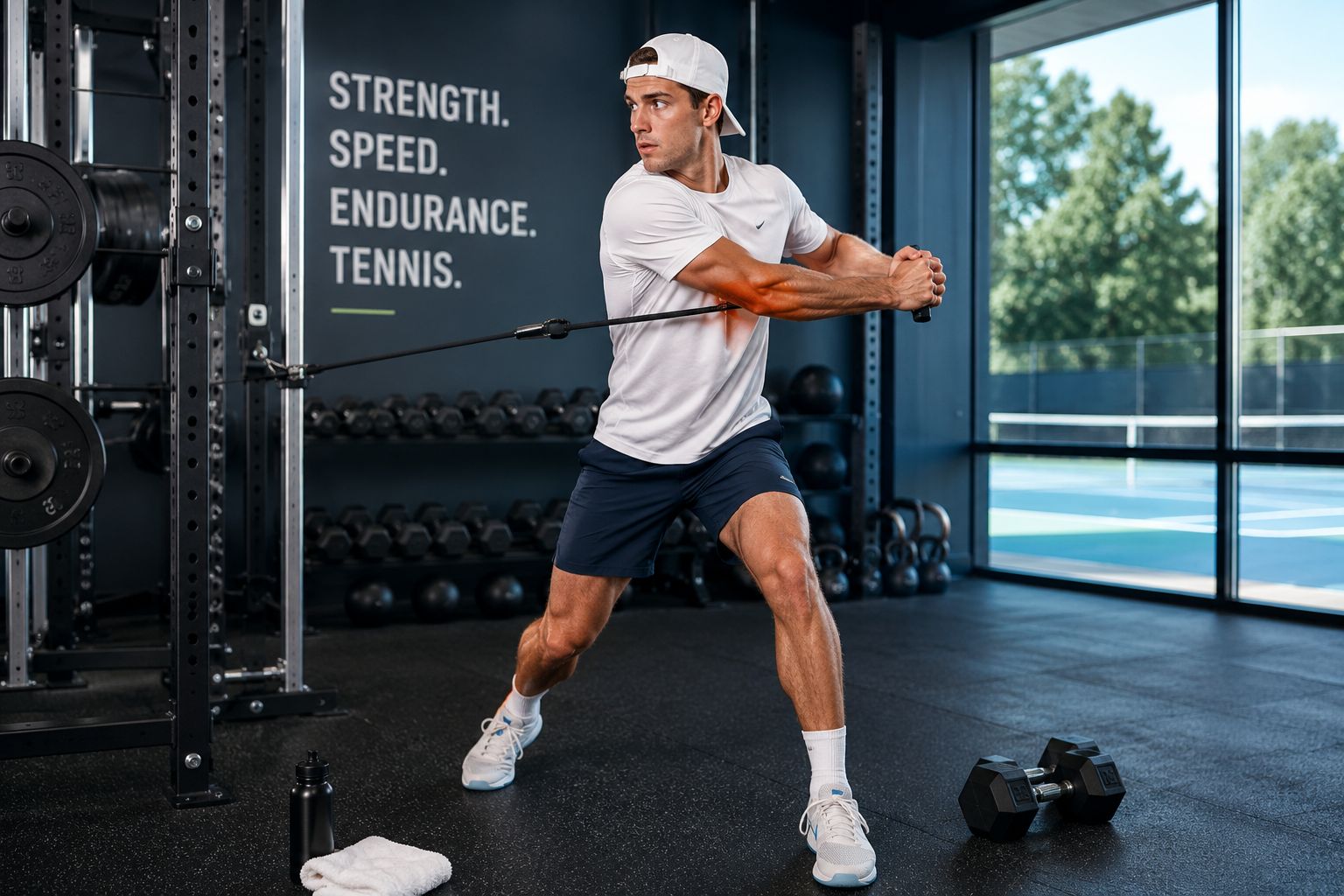
- TheraBand throwing simulation: An RCT in volleyball players showed this improves IR ROM, rotator cuff strength ratios, and glenohumeral joint position sense — all directly applicable to tennis mechanics. 3 × 10–15 reps at sport-specific speed. [13]
The Clinical Progression: How We Approach GIRD at Voltex PT
GIRD rehabilitation follows a phased progression. Jumping straight to strengthening without first restoring joint arthrokinematics is one of the most common mistakes — and one of the main reasons shoulder rehab stalls. [14]
- Phase 1 — Restore arthrokinematics: GH distraction and posterior glide mobilization. Reduce joint compression and restore accessory motion before loading the capsule.
- Phase 2 — Capsular extensibility: Modified sleeper and cross-body stretching daily. Target ≥10° IROM gain toward side-to-side symmetry. Reassess total rotational motion (TROM) — not just IR in isolation.
- Phase 3 — Neuromuscular control: Subscapularis activation, scapular stabilization (Y/T/W), external rotation strengthening. Addresses the dynamic stabilization deficit that perpetuates pathological humeral migration.
- Phase 4 — Sport-specific loading: TheraBand throwing simulation, progressive serving mechanics, deceleration training. Return to full play only when IROM side-to-side difference is ≤10° and ER:IR strength ratios are restored.
Restoring range of motion without restoring strength and neuromuscular control is half a rehabilitation. Both are required before a competitive tennis player should return to full serving and overhead work.
Frequently Asked Questions
Can I keep playing tennis while being treated for GIRD?
Often yes — but with modifications. The serve is typically the first stroke to be volume-reduced or temporarily substituted with a flat, lower-velocity delivery while posterior capsule extensibility is being restored. Your PT will guide a return-to-play protocol based on your IROM measurements and strength ratios, rather than pain alone.
How long does it take to fix GIRD?
Most patients see clinically meaningful internal rotation improvements — typically ≥10° — within 4–8 weeks of consistent stretching and manual therapy. Full resolution to within ≤10° side-to-side difference and return to unrestricted play typically takes 8–16 weeks, depending on how long the deficit has been present and whether associated pathology (labral or cuff) is involved. [9, 14]
Is GIRD the same as a rotator cuff injury?
No — but they are closely related. GIRD is a mobility and mechanical deficit that significantly increases the risk of rotator cuff pathology. Some players have GIRD without any cuff injury yet; others have GIRD that has already contributed to internal impingement and cuff damage. A proper evaluation will determine which is true in your case and guide treatment accordingly.
Does GIRD require surgery?
Conservative management — stretching, manual therapy, and progressive strengthening — is the first-line treatment for GIRD and has strong evidence supporting it. Surgery (typically posterior capsular release) is reserved for cases where conservative care fails after an adequate trial, or where significant associated labral or cuff pathology requires surgical repair. The vast majority of GIRD cases respond well to well-executed conservative PT. [14]
Do recreational tennis players get GIRD, or is it just competitive athletes?
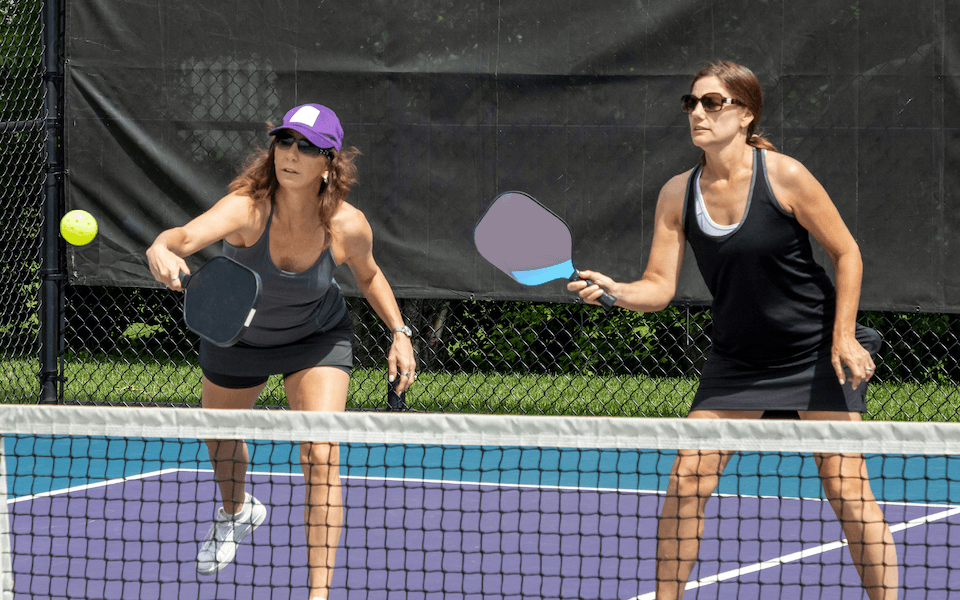
Both — but competitive players who train and play frequently are at highest risk due to cumulative loading volume. Recreational players who play multiple times per week, particularly if they have a heavy serve or strong forehand, can develop posterior capsule tightening over time. The warning signs are the same regardless of level.
Shoulder Feeling Off? Let’s Take a Look.
GIRD is treatable — but it doesn’t fix itself with rest alone, and it doesn’t get better by playing through it. The posterior capsule needs targeted mobilization, consistent stretching, and a progressive strengthening program to restore the mechanics that protect your rotator cuff and labrum across thousands of swings.
At Voltex Physical Therapy in Austin, we perform comprehensive shoulder assessments as part of every tennis-focused evaluation — including IROM measurement, TROM analysis, scapular dyskinesis screening, and rotator cuff strength testing. We build a plan around what your shoulder actually needs, not a generic protocol.
👉 Book a free 15-minute discovery call at Voltex PT today — and let’s figure out what’s going on with your shoulder.
References
- Senigagliesi F, et al. Glenohumeral internal rotation deficit in overhead throwing athletes: Evidence and perspectives of osteopathic manipulative treatment. Journal of Bodywork and Movement Therapies. 2024. https://pubmed.ncbi.nlm.nih.gov/39593481/
- Jácome-López R, et al. Glenohumeral internal rotation deficit in general population with shoulder pain: A descriptive observational study. Medicine (Baltimore). 2023;102(50):e36551. https://pubmed.ncbi.nlm.nih.gov/38115341/
- Fares MY, et al. Glenohumeral internal rotation deficit: insights into pathologic, clinical, diagnostic, and therapeutic characteristics. Clinics in Shoulder and Elbow. 2024;27(4):505–513. https://pubmed.ncbi.nlm.nih.gov/38738331/
- Minhaj S, et al. Glenohumeral internal rotation deficit and risk of upper extremity injury in overhead athletes: Systematic review. Archives of Physical Medicine and Rehabilitation. 2025;106(1):91–97. https://www.archives-pmr.org/article/S0003-9993(24)01046-3/fulltext
- StatPearls. Rotator Cuff Syndrome — Internal impingement, GIRD, and posterior capsule adaptations. NCBI Bookshelf. 2024. https://www.ncbi.nlm.nih.gov/books/NBK531506/
- Fares MY, et al. Peel-back mechanism and SLAP lesion risk in GIRD. Clinics in Shoulder and Elbow / PMC. 2024. https://pmc.ncbi.nlm.nih.gov/articles/PMC11615455/
- Mihata T, et al. Effect of rotator cuff muscle imbalance on forceful internal impingement and peel-back of the superior labrum: a cadaveric study. American Journal of Sports Medicine. 2009;37(11):2222–2227. https://pubmed.ncbi.nlm.nih.gov/19773527/
- Burkhart SS, Morgan CD, Kibler WB. The disabled throwing shoulder: spectrum of pathology. Part I: pathoanatomy and biomechanics. Arthroscopy. 2003;19(4):404–420.
- Brandão et al. The effects of sleeper stretch vs. crossbody stretch in overhead athletes with shoulder pain and glenohumeral internal rotation deficit: a randomized controlled trial. Journal of Science and Medicine in Sport. 2026. https://pubmed.ncbi.nlm.nih.gov/41580269/
- Wilk KE, Hooks TR, Macrina LC. The modified sleeper stretch and modified cross-body stretch to increase shoulder internal rotation range of motion in the overhead throwing athlete. Journal of Orthopaedic & Sports Physical Therapy. 2013;43(12):891–894. https://www.jospt.org/doi/10.2519/jospt.2013.4990
- Systematic review & meta-analysis. Stretching techniques for GIRD — 16 RCTs showing statistically significant improvements in IR and horizontal adduction ROM. ResearchGate / PEDro. 2023.
- Manske RC, et al. Posteriorly directed glenohumeral joint mobilisations combined with horizontal adduction stretches produce greater IR ROM gains than stretching alone, maintained at 4-week follow-up. Cited in Wilk et al., 2013. 2013.
- Murakami et al. Efficacy of throwing exercise with TheraBand in male volleyball players with shoulder internal rotation deficit: a randomized controlled trial. BMC Musculoskeletal Disorders. 2020. https://www.ncbi.nlm.nih.gov/pmc/articles/PMC7293786/
- Reina-Bueno M, et al. Efficacy of conservative therapy in overhead athletes with glenohumeral internal rotation deficit: a systematic review and meta-analysis. PMC. 2023. https://www.ncbi.nlm.nih.gov/pmc/articles/PMC9821615/